

This site is for U.S. Healthcare Providers only.
This site is for U.S. Healthcare Providers only.

Please try after sometime.



Implementation science actually addresses that gap where it actually takes physicians' practice and behaviors along with patient behaviors and try to address those issues that are particularly preventing physicians to do what the clinical trials told them to do or even guidelines for that matter.
Implementation science brings the interventions to the point of care and to our healthcare system and to our patients so that we get the action and the results and the outcomes that we want to be achieving for our population health.
We use what we call implementation strategies, which are how we get what we know into the practice. So they could be something that happens in the electric health record, that could be training, it could be education, it could be kind of changing the value proposition. And then what we do is implement those and measure different implementation outcomes.
We can perform clinical trials, but unless those trial results are translated into practice, then it's all for naught, we basically have not achieved anything.
The goal of LATTICE is really to bring the latest in evidence and science to all the patients that we serve.
We solved the problem with implementation science. Think of implementation science as you have the incredible trials that show there's big benefit and we know that it works and we need to do it. And then the actual clinical practice, what we're doing at bedside, what we're doing in our clinics, what we're doing in the hospital, what we're doing on our tele medicine visits, and the bridge between that is implementation science.
I think many of us in the room will agree it takes a long time for clinical research to actually become part of clinical practice. In fact, studies have looked at it and you're probably not going to believe this, but it's true 17 years for research to actually become part of everyday practice. And I'll argue the point that, and I think we all agree, our patients don't have 17 years, nor do we right, depending on where you are in your early career, mid career, none of us have 17 years to start to see some of these very impactful things affect our patients, help our patients, improve our patients lives, our communities and our world. So let's do a little thought game here because listen, I'm up here and I'm going to be sharing a lot of things around what we're doing in our vision.
I'm going to share some specific projects that we're doing in the LATTICE Consortium. But I want you to now start thinking to yourself, okay wait, I might have an idea at my institution. And say, you guys work at two different hospitals, A and B, okay? And we're going to come up with an awesome idea about LDL-C education for the clinicians is going to really help us to get to goal. And you've got the A group that's like, all right, we're going to do this plan and the B group they're going to, you guys are going to do the exact same plan, but you're going to execute it maybe a little differently. Maybe some of you engage with the leadership, some of you engage with the nursing team, some of you decide to use something that's more infographic, some of you send an e-mail. But at the end of the day, what we're seeing is that Hospital A, so this A group was able to execute and deliver on the outcome, which was lowering LDL-C, whereas Healthcare System B did the exact same project, but didn't get the kind of outcomes they were looking for and only got an LDL-C lowering of 30%. Both great learnings.
One, we're super pumped because they actually got the LDL-C down and we're going to examine the way they do that and blueprint it to scale to other institutions. B, Don't be sad. We're going to learn, right? Implementation is about learning. It means like, hey, what happened? Did you not engage with that key nurse or that key system? Did you not talk to the Epic team? What can we do to help you guys lift you up and get you to the same performance? So just know that implementation science is about figuring out why and how we got to that end goal and what we need to do to make those clinical guidelines and recommendations become part of our everyday practice.
I want to highlight this is not just like a, you know, oh, let's just come up, let's brainstorm and then go after it. No, the idea here is that this is based on theories, models, and frameworks. We're using science to build these models so they can be replicated and that we can publish, we can present, we can make sure that we share these strategies in a systematic way and learn from them. So I want you to come into this conversation and understand that implementation science has theories, models, and frameworks that are really critical to make them successful. I'm not going to get into the nitty gritty of this slide in terms of the hybrid models, but what it's showcasing is that we have rigorous models that allow us to interface with efficacy studies and ultimately build the outcome that we're looking to achieve.
If there's a clinical guideline that suggests our recommendations that we get to a certain LDL-C threshold by combination therapy, well then implementation research could help us figure out how to implement that in a clinical setting and ultimately approve the process and achieve the outcome. That's the goal of that efficacy study that initially was initiated. So I just want to let you know this is about rigorous science. Now, same way that we approach any scientific question, we have to understand what are the challenges, what are the barriers and at what level are we facing those barriers when we start to achieve an outcome that we're trying to go for. So we're focused on LDL-C reduction.
Let's use an example of a patient. We know our patients might have challenges around maybe health literacy, around understanding certain medications or understanding certain importance and their disparities. So how do we overcome those barriers? We'll be talking about Corrie Lipids, which is a project very excited about in our LATTICE network and it's focused on a smartphone application to empower and engage patients at that level to overcome a barrier. Now let's talk about clinicians. A lot of us are sitting there at the pick point of care with a patient, for example, and we might be thinking to ourselves, what was that latest guideline?
What was that latest expert recommendation that came out? There might be knowledge gap, maybe clinical inertia. Who owns the decision to change the LDL-C here? How do we over come those barriers? And I'm going to be talking about PROMPT-Lipid, a project from LATTICE out of Yale that tried to address this as well. And these are the kinds of things that we need to get to. I want all of you here to think about at your own institution, in your own practice, in your own workflows, what are some of these clinician barriers that we can start to address?
And then healthcare system, without a doubt, we are all in a situation where many of the decisions we make are shaped by the healthcare system. So it's important that we have quality metrics to know how are things going in our system. Are we missing the LDL-C mark because we don't routinely test as recommended by guidelines. What's the internal support to do these kinds of projects? And so I think speaking broadly about healthcare system is also important. So I just, I encourage you, you're at AHA, this is a time to be inspired, think about your own institution and leave from this meeting, I hope inspired to address one of these barriers, how LDL-C is being better managed and really approach and go after it with an implementation project.
Now I'm going to share some to hopefully get you revved up and make you think about, okay, I can do this in my own healthcare space as well. I'm really excited about it. This is really one of the quintessential LATTICE projects from our Yale team that said, we're going to address the barriers around the fact that clinicians might not have awareness, they might have some inertia, they might not know the most latest guidelines on LDL-C control and we're going to create a clinician created, meaning the clinicians themselves develop, this didn't come from administration or anyone else or researchers.
People who take care of patients develop this and it's a the best practice advisory prompt an electronic medical notification that comes up at point of care while you're seated with the patient. You could be a primary care doctor, could be a cardiologist, and it reminds you, hey, you know, you're sitting here with this patient, they had an MI, their LDL-C is 110. You might want to consider initiation of lipid-lowering therapy or intensification and by the way, the LDL-C goal is this.
So, I think I really like the setting because it's clinical, it's useful, it was 2500 patients, 96 providers across multiple practice environments, like I said. And their strategy, as I mentioned, was to use this electronic medical prompt that was created in the clinical workflow. And the way they were looking at it was, did LLT get intensified within 90 days? Was there a proportion of patients who reached that goal within six months? And I think what was super exciting about the outcomes is not only was there a significant improvement in just the workflows that they created and there was adoption and adherence of this at Yale, but there was also improvement in the intensification of lipid-lowering therapy and more patients getting to goal overall.
So I think this is an example of how that Yale team, the LATTICE Consortium team said, hey, we see this problem, we identified the barrier, we implemented this and in a fast pace, we created a tool that showed performance improvement in this area. And by the way, it's epic based and scalable. So it's not a one off. These are not one off projects. These are projects meant to scale across the US and the globe.Okay, so that's why we're creating it in a way that's systematic using implementation science.
Now I've referred to LATTICE, but I haven't given you the full explanation. And I really want to get you excited about it because it's super important. It's the reason we're sharing with you today and hopefully many more sessions. LATTICE is a coalition of independent experts who are coming together to really solve cardiometabolic patient care issues through evidence based tools and methodologies of implementation science. So we're volunteers. I'm a volunteer to really say, okay let's meet together, it's a great group and a network.
Let's come up with these tools and then let's share them. Once we discover something like PROMPT-Lipid, make it available on our website so that you can check it out and see, and there's many more projects like that. We're using these tools and methodologies just to emphasize the rigor of science that's underlying the creation of these tools so that you know that this isn't just, oh, it worked at Yale. I'm not sure if it's going to work at my institution. It was created in a way using standardized procedures and approaches.
And then what's so important, I think is also having an opportunity to have these educational symposiums. There will be regional sharing sessions tonight in New Orleans and every conference we go to and the website is awesome because you can go check it out. You can go see what people are doing and you can reach out and say, I'd like to do this at my institution or how do I get started? No need to be shy. There are no questions that are seem silly important just to be motivated to want to do something at your institution and to connect with these leaders in the field.
So why are we so obsessed with implementation science? Why do we really want to make a big difference? Because we know the guidelines are out there. We know these consensus statements are out there. We know there's these expert recommendations. But what's happening with our patients? I shared that earlier in the presentation. We're not meeting the mark.
We're still having so many events we can barely keep up and the data is very clear that LDL-C lowering could make a big difference. So we're really in this to adopt, facilitate evidence based tools that ultimately inspire and change the way that we're providing our healthcare and cardiovascular prevention so that we can make a big difference and we want to do it now. The other thing that I love about implementation science and you can probably tell through my enthusiasm, it's action oriented. This isn't sit and wait and watch. This is let's go ahead and take action now.
So I encourage you, there's plenty of different educational symposiums across the country. Laney and her team do a phenomenal job. If you ever see some of the cool pictures from LinkedIn, you guys are across the country meeting wonderful people doing really cool stuff and across the world, actually. Either way, it works. But I really encourage you to become part of this and learn more because it's a game changer.
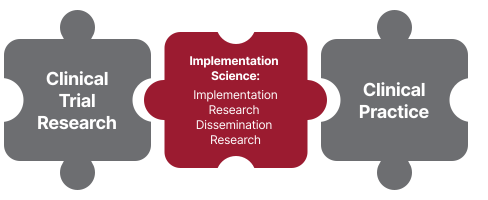
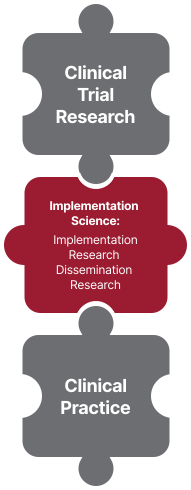
Implementation science is the scientific study of methods to promote the systematic uptake of research findings and other evidence-based practices into routine practice, and, hence, to improve the quality and effectiveness of health services.1
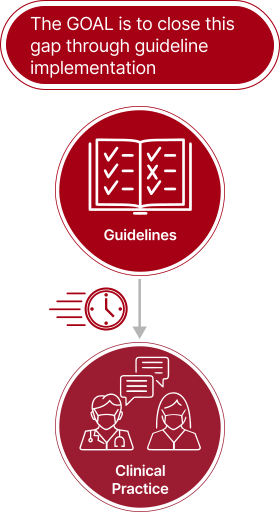
The Gap
It takes an average of 17 years for research to become standard practice and only 14% of it enters in day-to-day clinical care2,3
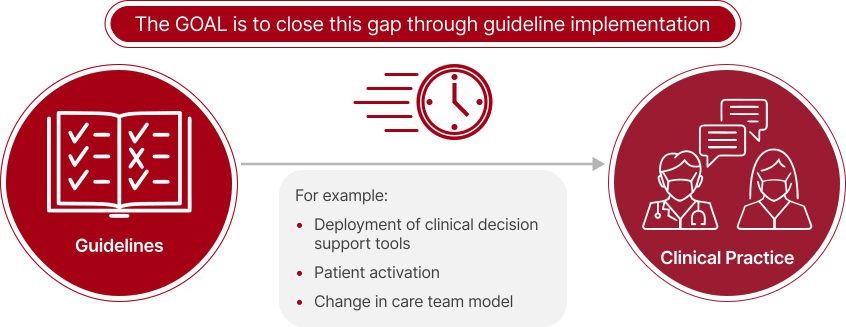
For example:
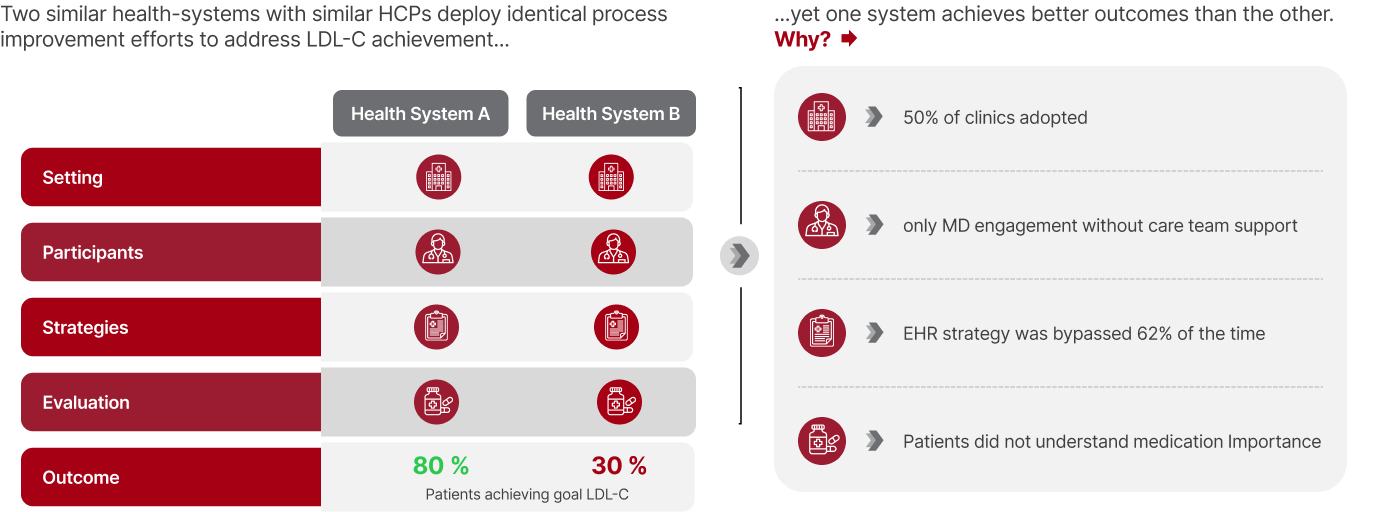
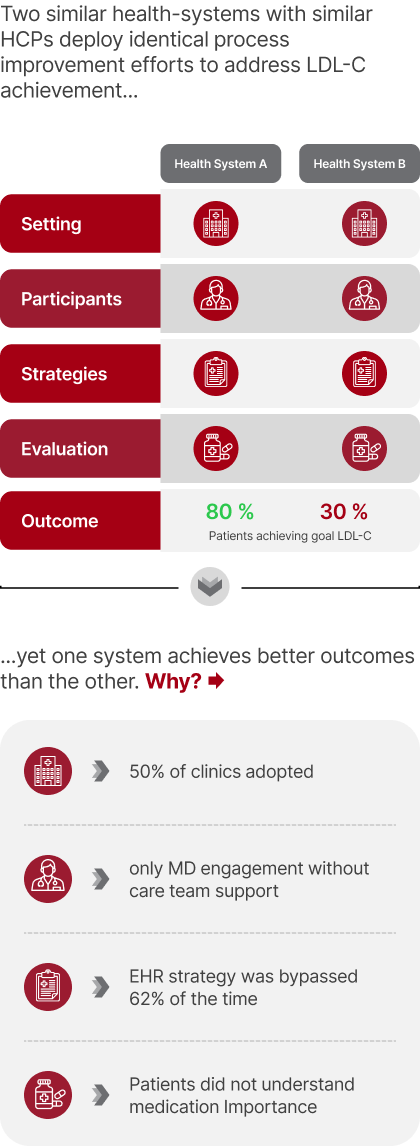
EHR = Electronic health record; IDNs = Integrated delivery networks; LDL-C = Low-density lipoprotein cholesterol.
Implementation science uses methods and strategies to facilitate uptake of evidence-based practice and research into care as well as how to adapt and scale strategies across healthcare settings.2
This work helps to identify barriers to implementation of evidence-based practice and test and apply implementation strategies that can overcome those barriers.2
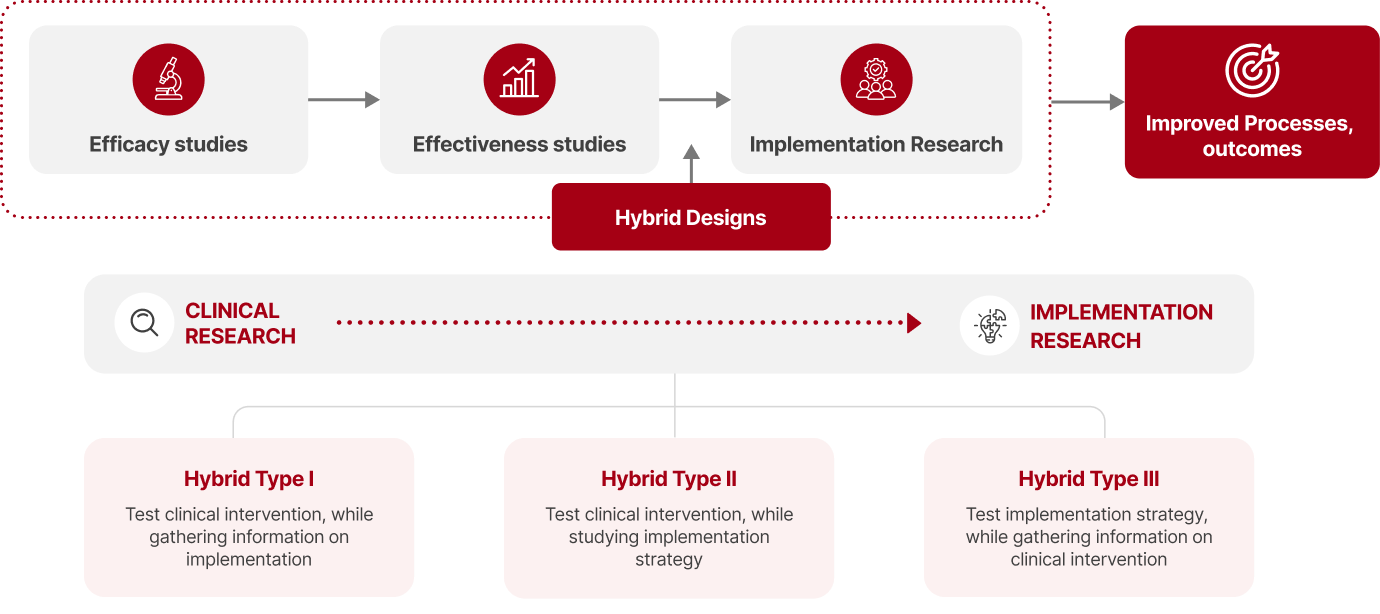
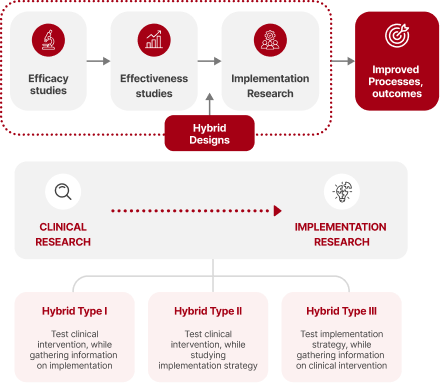
Implementation Science uses a variety of quantitative and qualitative methods to examine how to implement evidence into practice. The methods of implementation science studies may be determined by goals for implementation and guiding theoretical foundations.5
Implementation Science provides guiding theories/models/frameworks (TMF) to help us study and understand what strategies may help bridge this gap and how to scale implementation. The TMFs can help in identifying barriers to implementation, strategies that facilitate implementation, and outcomes to evaluate success.4,5
For example, previous implementation science research has applied frameworks like RE-AIM (Reach, Effectiveness/Efficacy, Adoption, Implementation, and Maintenance) or PRISM (Practical, Robust, Implementation and Sustainability), an updated application of RE-AIM, to explore how implementation strategies work in certain healthcare settings and may be scaled to other health systems. There are many TMFs that can be used to examine implementation.2
Overlapping areas of study with implementation science include: quality improvement, improvement science and behavioral science.5
1. Bauer MS, et al. BMC Psychol. 2015;3(1):32. 2. Beauchemin M, et al. ANS Adv Nurs Sci. 2019;42:307–324. 3. Balas EA and Boren SA. (2000); Yearbook of Medical Informatics: Managing Clinical Knowledge for Health Care Improvement. Stuttgart, Germany: Schattauer Verlagsgesellschaft mbH. 4. Stevens KR, Tobin JN. J Clin Transl Sci. 2020;4:149-151. 5. Evidera. https://
www.evidera.com/wp-content/uploads/2021/05/EFSpr21_A08_Hill-Science.pdf. Accessed July 7, 2026.
Take a look at what LATTICE™ Consortium
is currently working on.
Reach us at LATTICEConsortium@amgen.com to connect with peers and institutions who have track records in implementation and scaling.